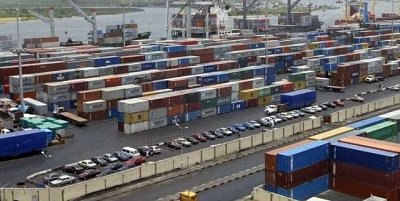


In recent years, Bonded Terminals have become a haven for illicit cargo import especially prohibited Pharmaceutical products, leading to increase in number of licensed bonded terminals to over 40 lately.
Early to late 2000s, operators in Nigeria witnessed declining fortunes following lack of cargo or refusal of the controllers of Nigeria Customs Service(NCS) to stem containers to them as shippers complained of extra service charges. This led to the extinction of many with their owners weighed down by huge debt profiles as terminals and warehouses lay empty, while many of the proprietors died from afflictions of all sorts.
But suddenly, there was an upsurge again in the business model as a result of the entry of some smart businessmen with established illicit drug trafficking network. Their entry ushered in compromise in security , eroding trade facilitation essence of bonded terminals in international trade supply chain.
Bonded Terminals as off-dock terminals are important facilities in global trade supply chain as they provide additional storage capacity for goods, alleviating congestion at the ports, reducing cargo dwell times and increasing efficiency of cargo clearance, while generating revenue for government through duties and other fees at the same time, creating additional job opportunities.
Ironically, the Customs Area Controller (CAC) of Tin Can Island Customs Command, Compt. Frank Onyeka at a recent parley with the media described bonded terminals as revenue leakage platforms, presupposing that the operators are economic saboteurs. He said that containers stemmed to them are either diverted in transit or duties not paid ultimately.
Believing in the logistics and economic values as well as the legitimacy of bonded terminals to business supply chain, Compt. Onyeka’s predecessor , ACG Dera Nnadi had ensured the take off of at least seven bonded terminals under his command as the Controller. Were they empowered to kill, one may ask?

In his half year performance report fortnight ago, the CAC Apapa Customs Command, Compt. Babatunde Olomu,Ph.D decried the activities of bonded terminals, saying his command had sealed three bonded terminals for numerous infractions bordering on smuggling, importation of illicit drugs, amongst others. At the last count, 27 containers of condemned pharmaceutical products were intercepted. But the Comptroller General of Customs(CGC), Adewale Adeniyi would not let that slip away in silence as he read his Riot Act, describing them as Merchants of Death.

A recent investigation by MMS Plus showed that illicit drug syndicates abroad partner local accomplices and their customs licensed agents in Nigeria to establish bonded terminals. This has increased the rate of drug trafficking in Nigeria through the sea ports
Our findings at the time revealed that a particular syndicate group with a base in Pakistan used to pay their licensed customs agent in Lagos between N100million and N150million to clear a container of illicit Pharmaceutical products from Lagos ports.
Two years later, they founded a bonded terminal in Lagos with security agencies and customs officials operating there as the extant law guiding the business permits. The question remains: Are these law enforcement agents assigned to this terminal not aware of these prohibitive business?
Illicit drugs are imported into Nigeria from various countries, with significant routes involving Latin America, South east Asia, and West Africa.
There are four basic types of illicit drugs which are: Narcotics, Stimulants, Depressants, Hallucinogens and Cannabinoids.
Narcotics are opioids like heroin,morphine tramadol and codeine, which can lead to physical dependence and addiction; Stimulants are drugs like cocaine, amphetamines, and methamphetamine, which causes increased heart rate, blood pressure, and aggression.
Depressants are substances like barbiturates,benzodiazepines, and GHB, which can slow down brain activity and lead to unconsciousness; Hallucinogens are drugs like LSD, Psilocbin, and PCP, which has the potency to alter perception, thoughts, and feelings. Cannabinoids is mainly Marijuana and synthetic cannabinoids,which can affect mood, memory and cognitive function.
In his personal capacity, former Secretary of Bonded Terminal operators, Aare Asiwaju Haruna Omolajomo, said, ” It is a welcome development that some bonded terminals are being closed. The reason is that not all bonded terminals today are to be called bonded terminals .
“The criteria for issuance of licences are most times not met. Some got theirs because they have a highly placed customs officer friend in Abuja or because the CGC is their friend. Out of the 40 bonded terminals in Lagos, how many can you really call bonded terminals? very few of them.
“A Bonded Terminal is different from a Bonded Warehouse. Most of the bonded terminals today are bonded warehouses because they lack the facilities and space. They even lack the basic requirements of bonded terminals. Many of the operators don’t even know the basic requirements of a bonded terminal.
“Many of them are not driven by service but money. But I like how the current Customs management is handling their oversight. They only shut those that have committed infractions. Before now, their style was to shut all the bonded terminals in Nigeria. I also agree with the CGC on his statement that Customs would scrutinize all bonded terminals to ascertain those complying with the trade best practices.
Omolajomo added: “Let there be two categories of bonded terminals- by establishing the difference between a bonded warehouse and a bonded terminal. Bonded warehouse contains few containers because of space constraints.
Omolajomo, who was a management staff of AML Bonded Terminal spoke on the criteria for having a bonded terminal, saying, “first of all, you have to be an agent with a Customs licence and then apply for a licence. You need to have a space with building and offices that must be customs iT connected. But before the licence issuance, Customs needs to come for inspections to ensure you have met all their requirements with specifications.
According to Omolajomo now CEO of Harsecom Logistics Limited, “Upon inspection, the operator will be issued a provisional approval with the checklist of other requirements or conditions to be met. So upon meeting the conditions, a final approval will be issued to the operator and a code of operation will be given to operate as a bonded terminal.”
On the allegation of aiding and abetting smuggling and money laundry as well as flying containers for evasion of duties, he stated, ” these have always been the accusations against the operators, but not all of them are like that. There are bad eggs in every sector. Anyone caught should be prosecuted. What I am against however is making a generic condemnation of all bonded terminals. There are genuine ones amongst them.”
Meanwhile, in his search for safety of lives, protection of public health, maintaining regulatory compliance within the international trade environment, read what seems like Riot Act to bonded terminals Operators, Importers and other Stakeholders in Lagos at the weekend, insisting that Bonded Terminals used by fraudulent importers and agents to import and clear dangerous and prohibited goods would have their licences revoked going forward.
The CGC said this during the handing over of 25 seized containers laden with unregistered and prohibited pharmaceutical products to the Director General of the National Agency for Food and Drug Administration and Control, NAFDAC, Prof.Moji Adeyeye. The Containers were intercepted at the Apapa Customs Area Command by the Controller and his officers.
The seizures, has an aggregate Duty Paid Value of N9,235,402,973.00.
Adeniyi also stated that henceforth, no containerised pharmaceutical products would be stemmed to any of the Bonded Terminals to forestall the risk of using them to bring adulterated Pharmaceutical products into Nigeria. He noted that only Apapa the nation’s premier seaport, PTML, Onne and MMA, Lagos will be used to bring in Pharmaceutical products henceforth.
Accordingly he disclosed that at the Premier Customs Seaport Command, Intelligence reports have revealed that some of the terminals were used to clear ‘bad jobs’, noting that three of them have been caught in the act.
The Customs boss revealed that out of three Bonded Terminals, the Customs has recovered N500m and N1.5 billion respectively from two of the bonded terminals for under payments. Furthermore, he told news men that Customs is reviewing Bonded Terminals’ operations including bonded terminals licence fees which has been the same for over a decade.
Meanwhile, Adeniyi, who described the people involved in bringing fake drugs into Nigeria as Merchants of death stated that the 25 containers comprise 21 forty-foot containers and 4 twenty-foot containers contain predominantly unregistered pharmaceutical products including sexual enhancement drugs such as REDSUN and HYEGRA sildenafil citrate products, codeine-containing cough syrups including CSC brands, antibiotic injections like oxytetracycline and artesunate, pain relief medications containing diclofenac sodium and paracetamol, skin lightening creams marketed as GBOGBONISE and SKIN CHEMIST, hip and breast enlargement products, and various tablets bearing fake NAFDAC registration numbers.
The seizures also include expired food products such as margarine and chocolate, veterinary medications including albendazole bolus tablets, antimalarial drugs like artepham-artequick, and consumer goods such as crusader soap, reflecting a sophisticated and diversified contraband portfolio that poses significant threats to public health, consumer safety, and regulatory integrity.
According to Adeniyi, the operational synergy they have developed with NAFDAC reflects strategic collaboration at its finest, with the Director-General providing critical intelligence even at midnight about suspicious importations that prove decisive to their anti-smuggling operations.
Hence the CGC averred that the MOU-facilitated coordination which was signed in November 2024 enables swift responses to emerging threats, and he commended the Director-General and her dedicated team for their technical expertise, combined with their enforcement capabilities, that has created a formidable barrier against criminal networks seeking to compromise the nation’s borders.
The Comptroller General of Customs also noted that intelligence-led enforcement strategy and real-time collaboration with other regulatory agencies, have helped fundamentally to enhance and transform their operational capabilities.
Recall that the Customs also handed over seized Pharmaceutical products to NAFDAC three months ago in its continued efforts to eradicating fake drugs.
According to the Customs boss, “As a Service, we remain committed to making our seaports, airports, and land borders impenetrable barriers against smuggling operations”.
No doubt, Wale Adeniyi is getting his men more involved in the war against sophisticated network of criminal enterprises that want to compromise national health security. The outcome of the war against false declaration and under payment is that the Customs inter- Agency Collaboration is producing measurabe results especially under the President Bola Ahmed Tinubu’s administration