
By Jude Odo (Regional Editor, South-East)
In the rolling hills of Enugu State, where the earth holds an estimated 2.75 billion metric tonnes of some of the world’s finest coal, a battle is being waged beneath the surface. It is not merely a battle over mineral resources, but a complex struggle involving environmental concerns, labour rights, governmental authority and the future of communities caught in the crossfire of industrial ambition.
The story of African Pits and Quarries (APQ) in Nigeria’s South-East defies a simple narrative. It is neither a straightforward tale of industrial triumph nor a one-dimensional chronicle of exploitation. Rather, it is a complex tapestry of legal disputes, human dignity, environmental concerns and the precarious balance between economic development and environmental stewardship.
Incorporated in 2005, owned and managed by Mr Oluwaseun Ogunsanya, APQ positioned itself as a significant player in Nigeria’s mining support services sector. The Enugu Coal Fields, with their estimated reserves and reputed quality, represented an opportunity of almost mythical proportions—a chance to revive an industry that once powered a nation and provided livelihoods for thousands.
When APQ commenced mining operations in Enugu State, beginning coal evacuation from the Awhum site in February 2022, the promise was palpable. Here was a company poised to unlock the resources beneath Enugu’s red soil and potentially revitalise communities that had languished since the decline of the coal industry decades ago.
But promises, as the people of Awhum would come to discover, do not always translate into prosperity.

LEGAL BATTLE
By September 2023, the relationship between APQ and the Enugu State Government had deteriorated into open conflict. The Enugu State High Court issued an interim injunction restraining APQ and its partner, Milhouse Energy Services Limited, from further mining activities at the Awhum site in Udi Local Government Area.
The government’s case was based on allegations including significant environmental degradation allegedly caused by unapproved blasting operations, non-remittance of taxes to the state and the alleged failure to remit pension contributions deducted from workers’ salaries.

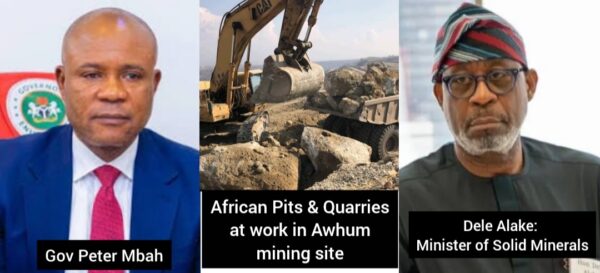
Governor Peter Mbah’s administration, which had begun a crackdown on mining activities in June 2023, appeared determined to send a clear message that mining activities would have to comply with environmental, fiscal and labour requirements.


The legal action represented more than a dispute between a corporation and a government. It raised fundamental questions about who should benefit from natural resources extracted from communities and the responsibilities of companies operating within environmentally sensitive areas.

By October 2023, a settlement had reportedly been reached, offering a possible path forward. APQ, which has its head office at Dolphin Estate, Lagos, and Milhouse Energy Services Limited agreed to pay ₦1 billion into the Enugu State Environmental Remediation Trust Fund.
The companies also committed to paying ₦100,000 in tax for every truckload of coal evacuated from the Awhum site.
During a visit to the area, MMS Plus observed significant mining activity, with more than 300 workers reportedly engaged at the site. A community source alleged that a substantial proportion of the workforce comprised people from Mr Ogunsanya’s ethnic group.
The Governor’s Media Office announced that the remediation fund would be managed by an independent committee of professionals specifically constituted to oversee the remediation and restoration of the affected environment.
However, the settlement did not bring an end to the controversy.
WORKERS’ PROTEST
In October 2025, the Awhum mining site, which had only recently resumed operations, was shut down again. This time, the disruption came not from a government injunction but from the workers themselves.
More than 100 indigenous employees reportedly blocked the road leading to the mining site in protest over what they described as longstanding grievances. The workers, who referred to themselves as the “landlords” of the community, said they had reached a breaking point.
Charles Okpimo, who spoke on behalf of the aggrieved workers, said many employees had allegedly been retained as casual workers for years. According to him, drivers, equipment operators and technicians worked without formal employment letters or the job security associated with recognised employment status.
The allegations also included claims of unfair dismissals and the bypassing of due process and fair-hearing procedures.
If established, such allegations would raise serious questions about labour practices at the site and the extent to which local communities benefit from mining operations conducted on their land.
The irony, according to the protesting workers, was that while the company extracted coal worth millions of naira from the earth, some of the people directly involved in the operation remained without basic employment security.
A community member who spoke to MMS Plus on condition of anonymity claimed that more than 50 truckloads of coal leave Awhum daily.
Efforts by our correspondents to independently establish the exact volume of coal mined and evacuated by APQ from the various sites were unsuccessful, as some workers declined to speak on the matter.
If the reported volume of more than 50 truckloads daily is accurate, the agreed ₦100,000 tax per truckload would represent substantial revenue for the state’s environmental remediation efforts.
However, questions remain about the actual volume evacuated and whether all applicable payments are being duly remitted.
These questions underscore the need for transparency in the management of mining operations and the environmental remediation fund.
THE ENVIRONMENTAL COST
Further investigations by MMS Plus indicate that coal mining activities by APQ and other operators have allegedly left parts of Awhum, Amankwo- Inyi and Onyeama sites with significant environmental challenges, raising concerns about the future of agriculture and livelihoods in the community.
Michael Odum, a resident of Awhum, told MMS Plus that mining activities had severely affected the community’s environment.
“The most immediate and devastating impact of APQ is the destruction of our arable land. Most of our farmland, including economic trees, have been devastated through coal mining without any compensation.”
Odum said the threat to agriculture extended beyond the physical destruction of farmland. He alleged that the quality of stream water around the mining area had been affected, raising concerns about the safety of water sources used by residents.
He maintained that the impact on the community’s water system had been profound.
Uchenna Odibe, a community leader, also linked mining activities in Awhum to worsening environmental problems.
“The operation of APQ has contributed to devastating gully erosion, runoff and deforestation—phenomena that directly undermine our agricultural capacity and ecological stability.”
These allegations point to a broader concern: the environmental cost of mining may extend well beyond the immediate mining pits. Land degradation, erosion, deforestation and potential impacts on water sources can have long-term consequences for agriculture, public health and community livelihoods.
QUESTIONS OVER ENVIRONMENTAL SAFEGUARDS
Perhaps the most troubling aspect of the Awhum mining controversy is the allegation that adequate environmental safeguards were not in place.
The Enugu State Committee on the Review of Mining Activities reportedly found that African Pits and Quarries operated without proper licensing from the state government and, crucially, lacked a discernible environmental mitigation plan.
A staff member of the Enugu State Ministry of Environment, who requested anonymity, told MMS Plus that the company had been required to provide evidence of Environmental Impact Assessment (EIA) certification, Ecological Control Permits and an Environmental Remediation Plan but allegedly failed to do so.
The allegation, if confirmed, raises important questions about regulatory oversight and compliance. It also highlights the need for stronger monitoring of mining operations, particularly where extraction activities have the potential to affect agricultural land, water sources and local ecosystems.
WHO BEARS THE COST?
For Awhum and similar mining communities, the controversy is ultimately about recognition and equity—recognition that their land, environment and labour have value and that communities hosting extractive industries should not bear disproportionate environmental and social costs.
The trucks continue to leave Awhum carrying coal from an industry that once played a central role in Nigeria’s industrial development. But the fundamental question remains: will the communities that host these operations finally enjoy tangible benefits from the resources beneath their feet?
Or will environmental degradation, labour disputes, inadequate compensation and regulatory controversies continue to overshadow the promise of mining-led economic development?
The Awhum experience offers a wider lesson for Enugu and Nigeria’s mining sector. As Nigeria and other resource-rich nations pursue economic growth, environmental stewardship, responsible labour practices and community participation must be placed at the centre of mining policy—not treated as afterthoughts to be addressed only after damage has occurred.
For APQ, the Enugu State Government and the communities of Awhum, the challenge is no longer simply about extracting coal. It is about demonstrating that mining can coexist with environmental protection, decent employment, regulatory compliance and equitable community development.
Until those questions are convincingly answered, the coal beneath Awhum will remain more than a mineral resource. It will continue to symbolise the unresolved tension between the wealth beneath the ground and the welfare of the people living above it.