
By Ibrahim Nasiru
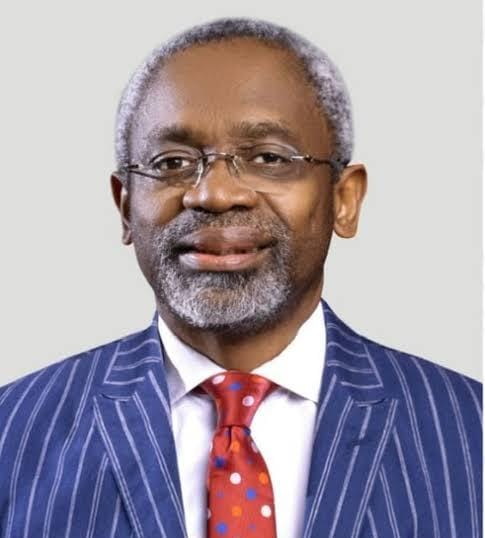
The strategic communications machinery of the federal government went into full overdrive on Tuesday during the high-profile unveiling of the All Progressives Congress (APC) 2027 manifesto, titled ‘From Reforms to Prosperity’. Led by the Chief of Staff to the President, Hon. Femi Gbajabiamila, alongside key cabinet ministers, the presidency aggressively urged Nigerians to study their policy documents and judge the ruling party strictly by the “promises kept” since assuming power in 2023.
While the executive spin doctors beautifully packaged this presentation as an exercise in institutional accountability, a critical, line-by-line deconstruction of the text exposes a profound, deeply troubling political contradiction: the systematic moving of the macroeconomic goalposts.
The ultimate irony of the Abuja gathering lies in Hon. Gbajabiamila’s grand philosophical declaration that “the difference between a politician and a leader is that while a politician thinks about the next election, a leader thinks about the next generation.” If the drivers of the Renewed Hope agenda are truly preoccupied with generational legacy rather than electoral survival, one must ask why they are launching an aggressive, hyper-structured 2027 Presidential Campaign Manifesto in late 2026.

The reality is that the political machinery is already heavily lubricated for the next ballot box, and this document serves as the opening salvo for elite re-alignment.
More importantly, a close inspection of the specific targets unveiled in the document betrays what can only be described as a 2031 trap.
The manifesto confidently commits the administration to scaling power generation toward 10,000 megawatts, achieving an annual economic growth rate of 6 per cent, and halving youth unemployment and out-of-school children. However, the fine print reveals that these critical milestones are projected for completion by the year 2031.

In essence, the ruling establishment is approaching the electorate to demand a fresh mandate in 2027 based on a promise to deliver basic, fundamental infrastructure at the very end of a hypothetical second term. Prosperity has effectively been rescheduled.
This reliance on paper projections is further weakened when the administration attempts to substitute macroeconomic indicators with micro-level tokenism. During his remarks, the Minister of Budget and Economic Planning, Atiku Bagudu, attempted to prove President Tinubu’s innate compassion by recalling a campaign incident in Zamfara where the President directed an official to give money to a struggling carrot seller. While anecdotal marketplace philanthropy makes for emotional campaign storytelling, it cannot serve as a viable substitute for structural economic management.

A nation of over 200 million people facing unprecedented inflationary pressures, currency depreciation, and eroded purchasing power cannot be governed by sporadic street-level handouts. Micro-tokenism does not create institutional wealth.
Furthermore, the persistent reliance on the invisible “cabal” as a scapegoat for policy failure has entirely outlived its analytical usefulness. Minister of Solid Minerals Dele Alake asserted that powerful vested interests are actively “fighting back” against the removal of the fuel subsidy and the unification of the foreign exchange window.
We are in late 2026. The administration has held total, unhindered control of the executive reins of power, the Central Bank of Nigeria, and the entire national security apparatus for over three years. If a mysterious cabal can still manipulate the economy and dictate the free fall of the Naira, it raises uncomfortable questions about who is truly driving the vehicle of state.
Similarly, the claim by Information Minister Mohammed Idris that citizens now travel the Abuja-Kaduna and Abuja-Kano corridors without any security anxieties flies directly in the face of local realities. Transport unions, rural communities, and regional stakeholders continue to navigate these zones with immense caution, often under heavy security escort.
The ruling party is asking Nigerians to view their paper manifesto as a binding contract. But a contract requires mutual trust and verifiable immediate value. The average Nigerian household cannot feed their families with a “public dashboard” or future promises dated for 2031.
If the presidency wants to earn its mandate in 2027, the focus must shift entirely away from cosmetic manifestoes and focus on immediate economic relief that puts food on the tables of ordinary citizens today.
Ibrahim Nasiru
Public Affairs Analyst