

The Nigerian Economic Summit Group has projected that Nigeria’s external reserves will rise to about $53bn by the end of 2026, even as it urged the Federal Government to prioritise the mobilisation of diverse sources of patient capital over continued reliance on public resources.
The projection was contained in addresses and presentations delivered on Wednesday in Lagos at the Nigerian Industrialisation and Competitiveness Forum.
Presenting the NESG H2 Economic Outlook, the Interim Director of Research and Development at the NESG, Dr Joseph Ogebe, said the external sector would remain resilient in the second half of 2026, with the naira staying broadly stable.

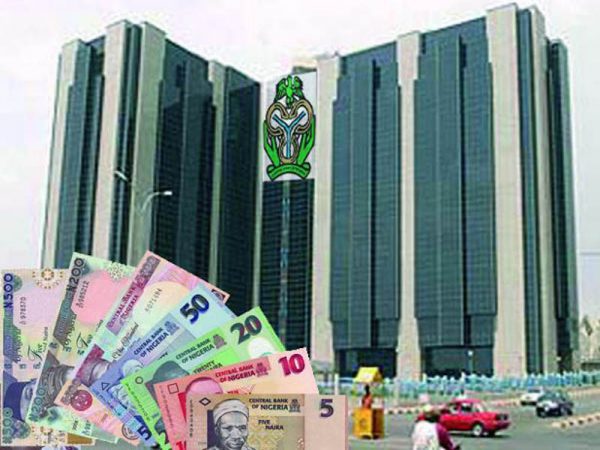
“The external sector is expected to remain resilient during H2-2026, with the naira broadly stable and the external reserves projected to increase to about US$53bn by year-end,” Ogebe said.
He attributed the projected reserve accumulation to higher crude oil production, favourable oil prices, stronger non-oil exports and sustained current account surpluses, adding that improved investor confidence, higher foreign portfolio inflows, stronger diaspora remittances and continued foreign exchange market reforms would strengthen FX liquidity.

Ogebe added that continued monetary policy discipline and a narrower parallel market premium should reduce speculative demand and support a more transparent foreign exchange market.
On inflation, the NESG projected that the headline rate would remain elevated for the rest of the year, averaging 15.5 per cent in the second half and for full-year 2026, citing insecurity in farming communities, flooding, high transportation costs, election-related spending and festive-period demand as key drivers.

He, however, said the economy would grow by 4.5 per cent in the second half of 2026, pushing full-year GDP growth to about 4.2 per cent, driven by improved performance in the oil, manufacturing, agricultural and services sectors. He said increased domestic refining activity would strengthen industrial output and reduce dependence on imported refined products, while manufacturing would sustain growth momentum as lower inflation and improved FX liquidity ease production constraints.
Speaking at the event, the Chairman of the NESG, Olaniyi Yusuf, said persistent global supply chain disruptions had reinforced the need for Nigeria to reduce its dependence on hydrocarbon revenues by strengthening its non-oil export base.
“Without a more diversified and competitive industrial sector, Nigeria will remain heavily reliant on imported intermediate inputs and finished manufactured goods, leaving the economy vulnerable to external shocks,” Yusuf said.
He described rapid industrialisation as an economic imperative rather than a mere policy aspiration, noting that manufacturing accounted for about 10 per cent of Nigeria’s Gross Domestic Product and 1.4 per cent of exports in the first quarter of 2026.
Yusuf said the African Continental Free Trade Area offered Nigeria an opportunity to expand beyond its borders, but warned that market access alone would not make Nigerian firms competitive.
“We must build the productive capacity to take advantage of that market,” he said.
He referenced the NESG’s 2026 Half-Year Macroeconomic Outlook Report, titled Turning Potential into Progress: Accelerating Nigeria’s Industrialisation for Economic Transformation and Inclusion, which he said linked industrialisation to social inclusion through three pillars — inputs, outputs and outcomes.
Yusuf said a comparative assessment against China, South Korea and Vietnam revealed substantial gaps across the three pillars, stressing that successful industrialisation began with strong institutions, infrastructure, skills, technology, finance and macroeconomic stability.
He said the Nigeria Industrial Policy 2025 must address weaknesses that undermined previous industrial strategies, including weak institutional coordination, poor execution and inadequate monitoring.
“While the Nigeria Industrial Policy recognises industrial finance as a strategic priority, implementation should focus on mobilising diverse sources of patient capital rather than relying predominantly on public resources,” Yusuf urged.
He added that this would require strengthening development finance institutions, leveraging blended finance with development partners, expanding credit enhancement mechanisms and encouraging private sector participation in industrial investment, with financing targeted at manufacturing firms and MSMEs with strong potential for employment generation and export growth.
Meanwhile, in a fireside chat on global models for industrial competitiveness moderated by the NESG Deputy Chief Economist, Dr Wilson Erumebor, Professor of Economics at the University of Oxford, Stefan Dercon, said Nigeria’s development required a strong coalition among the country’s political, business and traditional elite to drive structural change.
“The problem with a country like Nigeria is that Nigerian kind of works for these elites,” Dercon said, adding that the incentives for change remained weak because the status quo continued to benefit those in power.
He said countries that had successfully transformed their economies did so when elite coalitions became strong enough to prioritise long-term reform over short-term gains, stressing that Nigeria’s reforms, including the unification of its exchange rate windows, fuel subsidy removal and tariff adjustments, represented painful but necessary stabilisation measures.
Dercon urged the Federal Government to focus on a limited number of consistent policy priorities rather than sweeping announcements, and to ensure reforms benefited a broad coalition of interests rather than only the loudest voices in the business community.
He added that Nigeria could not simply replicate the state-led development models of South Korea, China or Japan, noting that those countries built meritocratic civil services over centuries. A foundation he said Nigeria’s institutions currently lack.