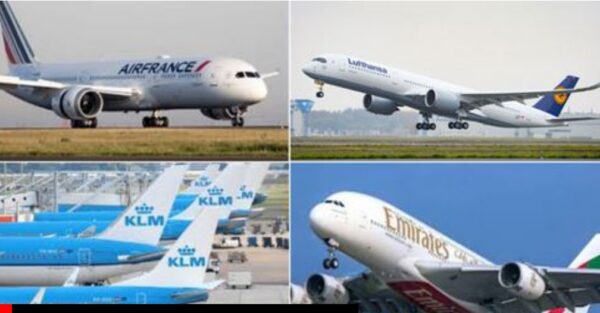

The cost of operating airlines in Africa is about twice the global average, with expensive fuel, taxes, charges, foreign exchange challenges and fragmented markets threatening the growth of the continent’s aviation industry, the International Air Transport Association has warned.
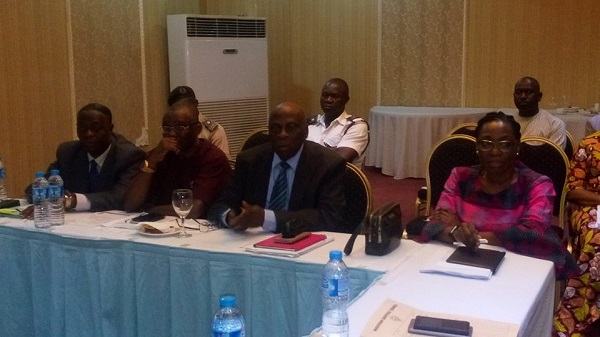
IATA’s Regional Vice-President for Africa and the Middle East, Kamil Alawadhi, raised the concern in a paper delivered at the Aviation Summit 2026 in Nairobi, obtained by our correspondent.
The IATA chief called for practical measures to improve safety, reduce costs, strengthen infrastructure and expand air connectivity across the continent.

“Aviation does not improve by accident. Better safety does not happen automatically. Lower costs do not appear on their own. Connectivity does not expand without deliberate action,” Alawadhi said.
He said African aviation had recorded progress since IATA launched its Focus Africa initiative in 2023, bringing governments, regulators, airlines, airports and development partners together to tackle challenges confronting the industry.

He said, “We recognized that no single stakeholder could solve Africa’s aviation challenges alone,” noting improvements in safety performance, financial settlement systems and digital border management.


Despite the progress, he said the continent still had significant safety gaps, saying, “The effective implementation rate of International Civil Aviation Organisation Standards and Recommended Practices in Sub-Saharan Africa stands at 60.34 per cent, below the global average of 69.46 per cent and the 75 per cent global target. Safety is aviation’s most important responsibility. Everything else depends on it.”

He also expressed concern about accident investigations, revealing that only 16 per cent of accident reports in Africa between 2020 and 2025 were completed and published in accordance with ICAO requirements.
“Every accident report provides valuable lessons that help prevent future accidents. When reports are delayed or never completed, those lessons are lost,” he said.
On operating costs, Alawadhi said African airlines were carrying an unusually heavy burden compared with their counterparts elsewhere. He added that unit costs are about twice the global average, while taxes and charges are at least 15 per cent above the global average.
“Fuel is also about 17 per cent more expensive in Africa and accounts for 40 per cent of operating costs, compared with 25 per cent globally,” he lamented.
He warned that these costs do not end with airlines but eventually affect passengers, businesses and entire economies. “Every unnecessary tax, charge or regulatory barrier increases the cost of travel and weakens connectivity,” he said.
He emphasised that expensive air travel could limit tourism, trade, investment and movement across African countries. Alawadhi also criticised excessive passenger levies linked to Advanced Passenger Information and Passenger Name Record systems in some African countries.
While supporting the use of passenger data to improve border security, he said such programmes should be properly designed and funded by governments rather than through excessive charges on airlines and passengers.
He cited passenger levies of $45 per sector in Tanzania, $30 in Gabon and $50 in Equatorial Guinea as examples of charges that could undermine air travel.
He, however, said that this is not sustainable, urging countries to implement API-PNR systems in accordance with international standards and ICAO principles. The IATA executive also pointed to blocked airline funds as another major obstacle to connectivity.
Although blocked funds have fallen from $1.5bn in July 2023 to $624m, African markets still account for about 70 per cent of the global total. He urged governments to improve access to foreign exchange and facilitate the repatriation of airline revenues.
On infrastructure, Alawadhi urged governments to consult airlines and other users before embarking on major airport projects.
“The most successful aviation projects are not always the biggest or the most expensive. They are the ones that eliminate bottlenecks, improve efficiency, reduce costs and create capacity for growth,” he said.