

About 12 years after, no fewer than five shipping companies have now made strong moves to settle out of court in the case they have with the Nigerian Shippers’ Council (NSC) over the collection of illegal charges at the nation’s seaports with N30 billion reportedly paid.
It would be recalled that terminal operators and multinational shipping lines in Nigeria had imposed some illegal charges, including Progressive Storage Charge and shipping line agency charge (SLAC) on shippers.
Following this, the NSC as the ports economic regulator had moved swiftly to stop the collection of the affected charges at the ports, a development that resulted in the terminal operators and shipping lines dragging the Council to court in 2014.
Incidentally, the shipping companies and terminal operators lost the case, as the Federal High Court in Lagos affirmed the decision of the Ports Economic Regulator.
The Lagos High Court in its judgment had ordered that the affected companies refund N1trillion to shippers over the collection of such illegal charges.
However, the affected companies decided to go to the Appeal Court, where they also lost, before they headed to the Supreme Court where the matter, according to the NSC CEO, Dr. Pius Akutah confirmed has been over the years.

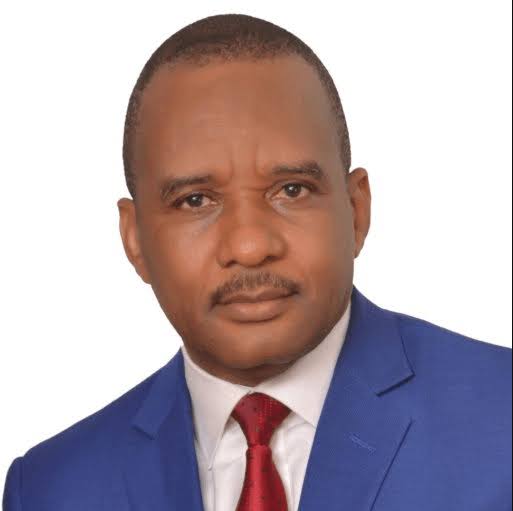
Akutah told members
of the League of Maritime Editors during a courtesy visit that so far, some of the affected companies have decided to settle out of court with the Council.

He said that so far, five the companies have paid certain amount as part of the settlement, which is currently in the Single Treasury Account of the Cargo Defence Fund under the Council.

Akutah did not declare the amount paid by the affected companies to the Council as settlement considering the N1trillion that the Court awarded against them but the leadership of the Lagos Shippers Association of Nigeria had claimed N30 billion had so far been paid.
Akutah disclosed that some of the shipping companies are still in the Supreme Court with the ports economic regulator, adding that the case is coming up on September 29, 2026.
However, he was full of optimism that some of the remaining companies may still decide to settle out of court.
Akutah said, “the case actually arose from the notice that was issued by the Council to shipping companies and terminal operators to refund certain excess charges that they imposed without approval to shippers within a time frame and when that notice was issued, they went to court challenging the powers of the Council to issue that notice. And also even challenging the appointment of the Council as ports economic regulator. So the case has been on . As at the moment, the case is at the Supreme Court.
“It has not been folded yet. At some point the parties decided to pursue settlement, the settlement is ongoing. Some of them have reached some conclusions and a certain amount agreed has been paid into the Cargo Defence Fund in the Single Treasury Account of the Cargo Defence Fund.
“The money is there. And we are still pursuing further negotiations with others, while the case is still in court. I think the next date of hearing is September 29, 2026. Some of them that have negotiated settlement and have signed and have paid, have filed notices of withdrawal from the case. Few of them have paid, more are still pursuing the case, but we are hoping that after the next sitting, may be some of them will come back to negotiate the settlement. That is where we are with the case”.
The NSC CEO assured that the amount collected so far remains very safe as it is domiciled in the Single Treasury Account.
Akutah disclosed that the Council recently issued a Standard Operating Procedure (SOP) to provide a structured governance over the money.
According to Akutah, “ the amount paid so far is well protected and the shippers are aware because we carry them along in all the processes.
“When the settlement is reached, we sign , they sign, and the shippers know everything.
“Recently we decided to issue a Standard Operating Procedure (SOP) to provide a structured governance over the money so that we are not operating that account approving, raising memos and approving on ourselves.
“So we are creating a corporate governance structure around the money under the SOP .
SOP has also agreed on certain areas where the money can be applied to be in the interest of shippers. It is only that which is in the interest of shippers that money can be applied to be in the interest of the shippers.
“ The shippers have taken part in drafting the SOP. Every paragraph in the SOP is inserted by them and their counsel before the approval so we are getting to the point where we can set up Board of Trustees of the Cargo Defense Fund.
“We now have a board of the Council, we also want to have a board of the Cargo Defense Fund so that the core corporate structure guaranteeing the money is complete so that no single individual can determine what happens to the money. So it will be a collective effort of different bodies using the structure corporate governance.
“Five companies cutting across shipping companies and terminal operators have paid money as agreed for out of court settlement”.