
The Campaign Visit Of Presidential Candidates To Akwa Ibom State And The Ibaka/Ibom Deep Seaport Question:Of What Significance?

By Emem Benson, Esq.
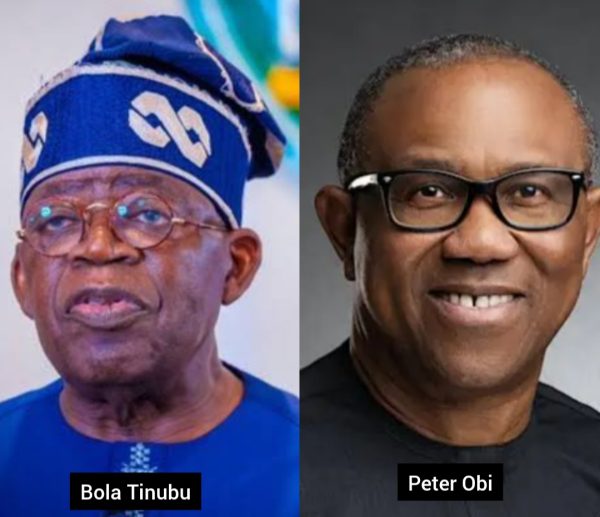
Today, 28th November 2026, the campaign train of the Presidential Candidate of the National Democratic Congress (NDC), His Excellency Mr. Peter Gregory Obi, berthed in Akwa Ibom State. His first port of call was Ibaka, a coastal community in Mbo Local Government Area, where he spent substantial time addressing the people and inspecting the proposed site of the Deep Seaport.
That single act has changed the conversation.
It is important to recall that, prior to the controversy now rocking the attempted relocation of the proposed Deep Seaport, Ibaka was the community where the site for the development of a Deep Seaport in Akwa Ibom State was originally proposed to be located.
The question is now unavoidable: Could a Peter Obi Presidency bring a resurgence of hope for the actualisation of the Ibaka/Ibom Deep Seaport?

For the people of Akwa Ibom, could this visit be a blessing in disguise? Can it draw the attention of key national and international maritime and economic players to this long-proposed yet unfulfilled strategic project?
It is to be recalled that the Federal Government first proposed a Deep Seaport at Ibaka Bay to take advantage of a rare natural harbour. Scientific studies, including the 2015 peer-reviewed work by Ephraim U. Paul of Akwa Ibom State University and James M. Kahatu of Texas A&M University, established that Ibaka Bay possesses an average equilibrium, non-dredged draft of 13.5 metres, stable for many decades. Other assessments put it above 13 metres, and in recent public presentations, up to 19 metres. Such a harbour is rare in the world.

The original vision was to have an integrated maritime complex: a Deep Seaport at Ibaka Bay to serve as a transhipment port for the entire West and Central African sub-region, together with a Free Trade Zone, and a Mega Shipyard for the integration and maintenance of supertankers and Floating Production Storage and Offloading (FPSO) vessels — at a cost of only about USD 2 billion, with only minimal maintenance dredging. That promise has been systematically betrayed.
On Friday, 6th November 2026, during a visit to Uyo for his re-election campaign, His Excellency President Bola Ahmed Tinubu, GCFR was told on a campaign podium that Akwa Ibom has a natural harbour with a non-dredged draft of 19 metres, and he graciously gave “approval” again. Though the actual location was neither visited nor mentioned.
It is an unassailable fact that the project has become the most recycled campaign subject in Nigeria’s political history, approved in every election cycle, abandoned after every election.
But today, 28th November, Peter Obi did the opposite of a podium approval. He went to Ibaka. He saw the site. He listened. The people were excited to witness a presidential candidate take the time to visit and assess the location of Akwa Ibom’s long-promised greatest project. This singular act goes to support the notion that the project should be given deserved priority attention, serious engagement, and a clear understanding of the opportunities it holds for the people.
That is the significance of Peter Obi’s visit to Ibaka: it moved the Deep Seaport from campaign rhetoric to physical reality, from Uyo podium to the Ibaka site of the proposed Deep Seaport.
It is regretably interesting to recall that both the Lekki Deep Seaport and the Ibaka Deep Seaport were approved by the Federal Government on 31 March 2009 as strategic maritime projects aimed at expanding Nigeria’s port infrastructure and positioning the country as a regional shipping hub.
Following its approval, Lekki enjoyed sustained government support, policy consistency, investor confidence, and an effective public-private partnership, and was eventually completed in 2022 and commissioned by President Muhammadu Buhari in January 2023 for full commercial operations. Today, Lekki is Nigeria’s first fully operational deep seaport and one of Africa’s most modern maritime facilities. With a draft of approximately 16.5 metres, it can accommodate the world’s largest container vessels and supertankers.
In contrast, despite possessing one of Nigeria’s finest natural deep-water locations and receiving Federal Government approval alongside Lekki, the Ibaka Deep Seaport remains largely unrealised. Instead of enjoying continuity of purpose, it became entangled in years of ethnic politics, controversies over relocation, and persistent policy inconsistency.
For the Ibaka Deep Seaport, the prolonged delay has come at an enormous cost: loss of billions of dollars in potential investment, thousands of unrealised employment opportunities for youths in Akwa Ibom State and the Niger Delta, delayed industrialisation of the Akwa Ibom coastal corridor, lost opportunities in ship repair, logistics, and marine services, as well as waste of substantial public resources already committed to planning and feasibility studies.
The contrast between Lekki and Ibaka is a powerful lesson on the consequences of governance choices.
Let it be made clear that Peter Obi’s visit to Ibaka did not build a port. What it did was more fundamental: it reminded Nigeria that the port has a place, the place has a people, and the people have a right to be heard.