
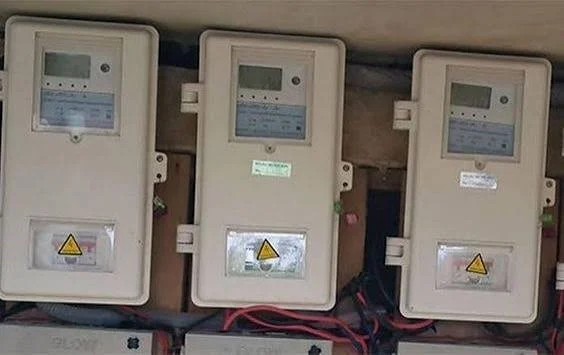
The Federal Government’s free electricity metering programme, launched with a $500m World Bank loan to close Nigeria’s metering gap by deploying 3.2 million smart meters, has recorded only 217,784 installations, the latest industry data show.
The development comes despite earlier assurances by the Bureau of Public Enterprises that the Distribution Sector Recovery Programme would deploy 1.2 million smart meters by December 2024 and another 1.3 million by the second quarter of 2025 as part of efforts to eliminate estimated billing and improve electricity distribution across the country.
The BPE had described DISREP as a strategic Federal Government initiative, supported by the World Bank, to improve the financial and technical performance of electricity distribution companies.

Besides deploying 3.2 million smart meters, the programme was designed to reduce aggregate technical, commercial and collection losses, improve billing accuracy, eliminate estimated billing, support DisCos’ performance improvement plans approved by the Nigerian Electricity Regulatory Commission, and promote local meter manufacturing.
The bureau also said the programme would ultimately distribute two million meters annually from 2025 to bridge Nigeria’s estimated seven million metering gap, while at least 250,000 meters were to be sourced from local manufacturers.

In a nationwide public enlightenment campaign last year, the Presidency, through the State House and the Bureau of Public Enterprises, urged Nigerians to take advantage of the free metering programme, stressing that electricity consumers in Abuja, Benin, Eko, Enugu, Ibadan, Ikeja, Jos, Kaduna, Kano, Port Harcourt and Yola Distribution Companies could obtain the meters free of charge.

The government specifically warned consumers not to pay for either the meters or their installation, stating that both were fully funded under the DISREP initiative implemented by the Bureau of Public Enterprises in collaboration with the Federal Ministry of Power and the Transmission Company of Nigeria.

However, the Nigerian Electricity Regulatory Commission’s first-quarter 2026 report showed that cumulative installations under the programme stood at only 217,784 meters as of March 31, 2026.
The cumulative deployment means the Federal Government has achieved only 6.8 per cent of the programme’s 3.2 million smart meter target, leaving about 2.98 million meters yet to be installed under the World Bank-backed initiative.
According to the commission, deployment under the programme commenced in May 2025, with 129,224 meters installed during the first quarter of 2026, up from 99,545 installed in the preceding quarter.
The report stated, “A total of 129,224 meters were installed under the DISREP framework in 2026/Q1 compared to the 99,545 meters installed in 2025/Q4, representing an increase of 29.81 per cent. This brings the cumulative installations under the framework to 217,784.”
The 129,224 meters deployed under DISREP accounted for 36.14 per cent of the 357,495 meters installed nationwide during the quarter, making it the largest single metering framework during the period.
The report further showed that Benin Electricity Distribution Company recorded the highest number of DISREP installations with 26,083 meters, followed by Abuja DisCo with 24,072 and Port Harcourt DisCo with 22,145.
In January 2026, the Federal Government announced the deployment of 500,000 free meters under the World Bank-backed programme.
The former Minister of Power, Adebayo Adelabu, who expressed satisfaction over the arrival of another tranche of 500,000 smart meters under DISREP, said the meters would be distributed to all electricity customers, regardless of their tariff band.
“I want to mention that it is unprecedented that these meters are to be installed and distributed to consumers free of charge. Nobody should collect money from any consumer. It is illegal. It is an offence for the officials of distribution companies across Nigeria to request a dime before installation; even the indirect installers cannot ask consumers for a dime. It has to be installed free of charge so that billing and collections will improve for the sector,” Adelabu said in January.
He stated that the first phase of the scheme would install 1.43 million meters, out of which about one million had been received.
Adelabu, who expressed dissatisfaction with the pace of metering, said he was optimistic that within a couple of years every household, business and institution would be fully metered, making billing and revenue collection in the power sector more transparent, fair and efficient.
However, the installation of fewer than 220,000 meters since the programme began indicates that implementation has lagged behind projections.
Manufacturers stall procurement
The Association of Meter Manufacturers of Nigeria has emerged as one of the major obstacles to the scheme. The association secured a court injunction halting the procurement of 1.55 million smart meters, posing a direct challenge to the programme’s implementation.
In its latest Implementation Status and Results Report obtained from its website, the World Bank disclosed that the legal action had become the programme’s biggest implementation risk and could force the cancellation of the procurement if the dispute is not resolved soon.
According to the report, the injunction has stalled the opening of bids under the second phase of the international competitive bidding process for the procurement of additional smart meters.
The bank explained that AMMON, representing local meter manufacturers and assemblers, argued that the international procurement framework excluded Nigerian manufacturers and undermined domestic industry development.
However, questions remain over how many meters have actually been installed from the nearly one million procured under the programme’s first phase.
Meanwhile, electricity distribution companies installed 357,495 meters in the first quarter of 2026, representing a 10.38 per cent increase from the 323,864 deployed in the preceding quarter. Apart from DISREP, 118,681 meters were installed under the Meter Asset Provider scheme, 97,992 through the Meter Acquisition Fund, while DisCo-financed and vendor-financed arrangements accounted for 10,589 and 1,009 installations, respectively.
Despite the additional installations, Nigeria’s metering gap remains substantial. NERC said there were 12,386,848 active electricity customers as of March 31, 2026, but only 7,324,079 had been metered, representing a national metering rate of 59.13 per cent. Consequently, about 5.06 million active customers remained without meters.
To accelerate meter deployment, President Bola Tinubu recently announced the launch of a training programme for 5,000 young Nigerians as meter installers and technicians under the Presidential Metering Initiative.
The President said the scheme is aimed at creating jobs, closing the country’s metering gap and improving electricity supply. The Ministry of Power had, in 2025, decried the shortage of meter installers, saying it was hindering the government’s efforts to close the metering gap.
“Through the Presidential Metering Initiative, which I established to close Nigeria’s metering gap, end estimated billing, protect consumers and strengthen the electricity market, we are opening a new pathway for 5,000 young Nigerians to be trained as meter installers and technicians under The Power Force. This programme is about jobs, skills and dignity,” Tinubu said.
Tinubu added that the training would be open to eligible Nigerians who had completed their secondary school education, with a dedicated quota reserved for members of the National Youth Service Corps.